
Music Therapy Resources
Explore free and open-access music therapy research, article summaries, and educational resources curated by Revival Jam. Search the library below for topics spanning autism, depression, anxiety, quality of life, dementia, and more.
Telehealth Music Therapy: Access, Connection, and Virtual Care
This 2026 scoping review examines telehealth music therapy across clinical, educational, and community settings. Across 53 peer-reviewed studies, the findings suggest that virtual music therapy can support access, engagement, mood, anxiety reduction, and caregiver connection, while also highlighting the need for stronger comparative research.
Article Overview
Telehealth music therapy has grown rapidly in recent years as clinicians, educators, and researchers have adapted music therapy to virtual care settings. In this 2026 scoping review, researchers mapped the existing literature on telehealth music therapy across clinical, educational, and community contexts. The review identified 53 eligible peer-reviewed studies published between 2009 and 2025, with most appearing after 2020.
The findings suggest that telehealth music therapy shows strong feasibility, accessibility, and acceptability across a wide range of populations, including children with developmental delays, adults with cancer, older adults with dementia or Parkinson’s disease, veterans, caregivers, and students. Reported benefits included reduced anxiety, improved mood, greater caregiver-client connection, enhanced engagement, and expanded access for rural, isolated, or homebound individuals. At the same time, the review notes that the evidence base is still dominated by small-scale qualitative and feasibility studies, with a lack of randomized controlled trials and ongoing challenges related to technology, infrastructure, and fit for certain clients or interventions.
Why This Matters
This article matters because it gives a broad, current picture of how telehealth music therapy, virtual music therapy, and online music therapy are being used in real-world practice. For readers searching for remote services, it supports the idea that music therapy can be delivered meaningfully through videoconferencing and hybrid models, especially when barriers like distance, health limitations, transportation, or scheduling make in-person care difficult.
It is also useful because it stays grounded in the current evidence. This is a scoping review, not a meta-analysis, so it is best understood as a map of the field rather than proof that telehealth is always equal to or better than in-person care. The review specifically notes that telehealth music therapy may not be the best fit in every situation and that factors like technology access, caregiver support, therapeutic relationship, and client safety still matter. That balance makes it a strong library article for your site because it combines strong SEO value with careful, credible framing.
Clements-Cortés, A., Pranjić, M., Hernandez-Ruiz, E., Kelly, L., Brotons, M., Selvarajah, I., Wandel, N., & Han, E. (2026). Telehealth music therapy research, training and practice: A scoping review. The Arts in Psychotherapy, 98, 102432. https://doi.org/10.1016/j.aip.2026.102432
Read The Full Article

Elegant Conversation in Mountains, spurious seal of Tenshō Shūbun, 17th century
Music Therapy for Depression: Expression, Support, and Emotional Well-Being
This Cochrane systematic review examined whether music therapy may help reduce depressive symptoms and support emotional well-being. Across 9 studies involving 421 participants, the findings suggest that music therapy added to standard care may provide short-term benefits for depression, anxiety, and functioning.
Article Overview
Music therapy is increasingly being explored as a supportive treatment for people living with depression. In this 2017 Cochrane systematic review, researchers examined randomized and controlled clinical trials to evaluate whether music therapy could improve depressive symptoms when added to treatment as usual or compared with other therapies. The review included 9 studies with 421 participants.
The findings suggest that music therapy added to treatment as usual may provide short-term benefits for people with depression. Compared with treatment as usual alone, music therapy was associated with improvements in clinician-rated and patient-reported depressive symptoms, and it was also linked with better anxiety and functioning outcomes. The review did not find clear evidence for improvement in quality of life, and comparisons with psychological therapies remained uncertain because the evidence was limited and, in some cases, low quality.
Why This Matters
Depression can affect emotional well-being, motivation, daily functioning, and quality of life. This article matters because it highlights music therapy as a potential supportive mental health intervention that may help reduce depressive symptoms when used alongside standard care. For readers searching for research on music therapy, depression, and emotional well-being, this review offers a strong evidence-based starting point.
It is also important because the review comes from Cochrane, a widely respected source for systematic reviews in healthcare. At the same time, the article is careful not to overstate the findings: the benefits were short-term, the total number of studies was relatively small, and some comparisons with other therapies were still uncertain. That balance makes it a credible and useful article for a website library focused on music therapy research.
Aalbers, S., Fusar-Poli, L., Freeman, R. E., Spreen, M., Ket, J. C. F., Vink, A. C., Maratos, A., Crawford, M., Chen, X.-J., & Gold, C. (2017). Music therapy for depression. Cochrane Database of Systematic Reviews, 2017(11), CD004517. https://doi.org/10.1002/14651858.CD004517.pub3
Read The Full Article

Repose, John White Alexander, 1895.
Music Therapy for Late-Life Depression: Emotion, Connection, and Well-Being in Older Adults
A 2025 scoping review explores how music therapy may support older adults living with late-life depression through emotion regulation, social connection, reminiscence, motivation, and well-being. The article highlights key therapeutic processes that may shape outcomes in later-life mental health care.
Article Overview
This 2025 scoping review examines how music therapy may support older adults living with late-life depression. Reviewing 31 studies, the authors identified a range of therapeutic factors, mechanisms of change, and related outcomes associated with music therapy in this population. The review organized these findings into five domains: emotion, social, cognition, arousal, and behavior and motivation.
Among these domains, emotion emerged as the most prominent. The review highlights processes such as emotion regulation, emotional expression, pleasure, stress reduction, reminiscence, social connection, and motivation as important parts of how music therapy may help older adults with depression. Rather than focusing on one single intervention, the article maps the broader field and shows how music therapy may support mental health and quality of life in later adulthood.
Why This Matters
This article is valuable because it helps explain not only that music therapy may support older adults with depression, but also how it may work. For families, clinicians, and care communities, this kind of review offers a more complete picture of music therapy as a relational, emotional, and biopsychosocial intervention rather than just a pleasant activity.
It is also a strong fit for a public-facing music therapy library because late-life depression is an important mental health issue, and many people are looking for supportive, nonpharmacological approaches that address mood, connection, engagement, and quality of life. The review also honestly notes that the literature remains heterogeneous, which helps present the field in a credible and balanced way.
Lu, H., Li, Y., Wong, M. T. H., Qiu, X., Zhang, M., Jiang, C., Zhang, X., Lau, K. K.-L., Ho, R. T. H., & Tong, T. (2025). Therapeutic factors, presumed mechanisms of change, and relevant outcomes in music therapy for people with late-life depression: A scoping review. The Arts in Psychotherapy, 95, 102325. https://doi.org/10.1016/j.aip.2025.102325
Read The Full Article
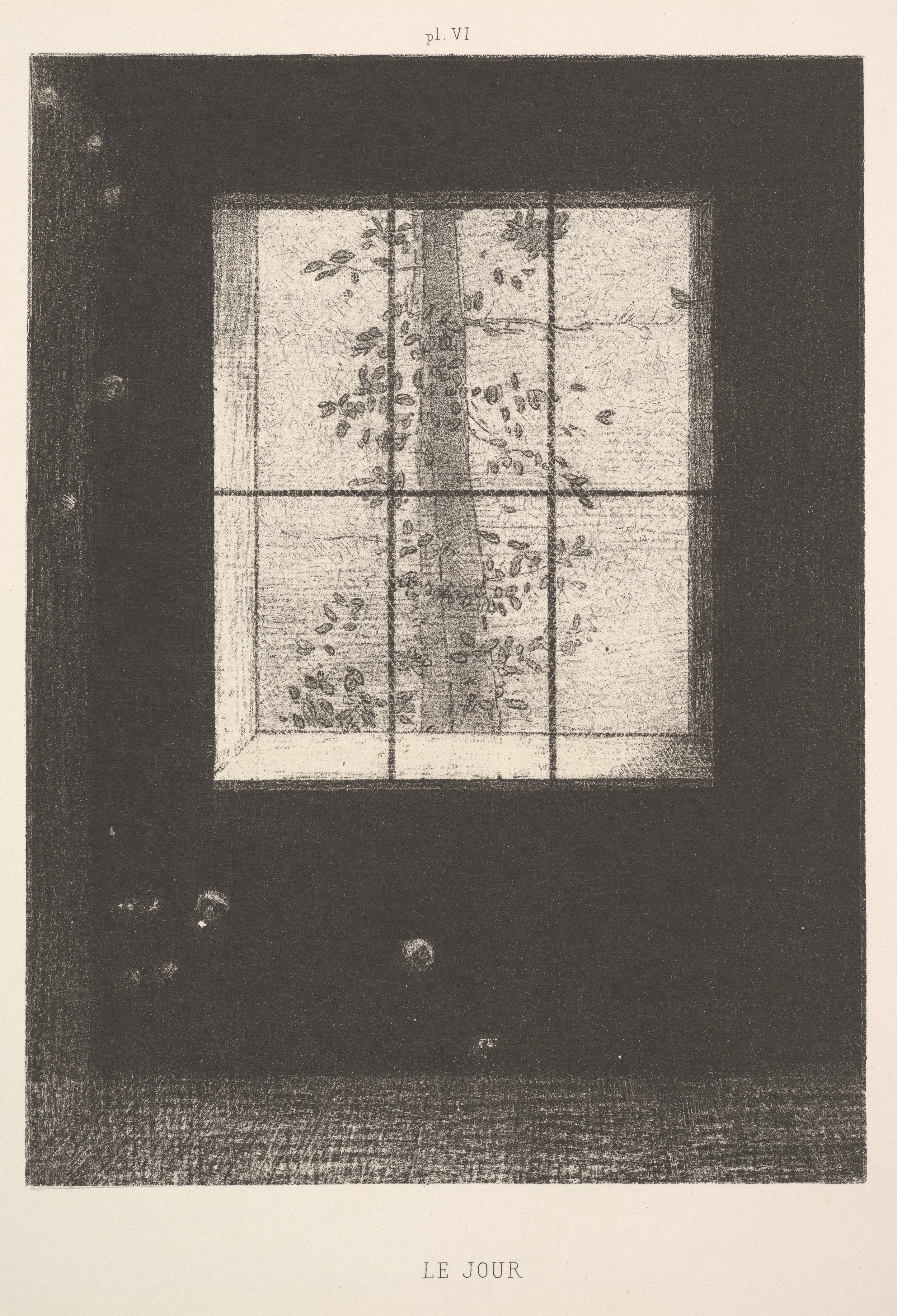
Day (Le Jour), from the series, Dreams (Songes), plate VI, Odilon Redon, 1891
Music Therapy for Advanced Dementia: Distress Reduction, Connection, and Well-Being
A new open-access review in Nature Mental Health explores how music therapy may reduce distress and support well-being in advanced dementia care. The article highlights the role of attunement, relationship, sensory connection, and staff collaboration in improving care experiences.
Article Overview
This article explores how and why music therapy may help reduce distress and improve well-being for people with advanced dementia in institutional settings such as care homes, hospitals, and inpatient units. Rather than focusing only on whether music therapy works, the review examines the conditions, relationships, and care practices that help make it effective.
Using a realist review approach, the authors developed a program theory showing that music therapy may be especially helpful when it is delivered regularly, tailored to the person, and supported by communication among therapists, staff, and families. The review highlights short-term reductions in distress, improved mood and engagement, and the potential for music to become part of everyday dementia care.
Why This Matters
Advanced dementia care often involves distress, agitation, anxiety, disconnection, and challenges with communication. This article matters because it helps explain that music therapy is not simply about playing songs. It is about attunement, relationship, sensory connection, emotional regulation, and meeting needs in the moment in ways that may still be accessible even in late-stage dementia.
It is also especially valuable because it points to the wider care environment. The review suggests that when staff and families understand how music therapy works, they may be better able to support meaningful interaction, reduce distress, and improve quality of care. For a public-facing website library, this gives readers both clinical credibility and a clear explanation of why music therapy can matter in real-world dementia care.
Thompson, N., Odell-Miller, H., Underwood, B. R., Wolverson, E., & Hsu, M.-H. (2024). How and why music therapy reduces distress and improves well-being in advanced dementia care: A realist review. Nature Mental Health, 2, 1532–1542. https://doi.org/10.1038/s44220-024-00342-x
Read The Full Article

Fragment of a Marble Grave Stele of a Woman, Greek, Attic, ca. 400–390 BCE.
Music Therapy for Psychological Trauma: Emotion Regulation, Social Connection, and Recovery
A 2025 integrative review examines how music therapy may support trauma recovery through emotion regulation, social connection, nonverbal expression, and therapeutic safety. The article highlights growing evidence for music therapy in trauma-focused care, including PTSD-related treatment research.
Article Overview
This 2025 theoretical integrative review explores how music therapy may support people recovering from psychological trauma, including post-traumatic stress disorder (PTSD). The authors describe music therapy as a clinical, evidence-based practice that has been used across mental health settings to support emotion processing, affect regulation, and functioning, while also reviewing the growing trauma-focused literature in the field.
The review identified 19 empirical studies published since 2017 and found important advances in trauma-focused music therapy research, including increased use of randomized controlled trials, physiological measures, more detailed intervention descriptions, and the emergence of manualized treatments. The paper highlights recurring themes such as emotion regulation, social affiliation, nonverbal expression, agency, and therapeutic safety as possible mechanisms through which music therapy may help trauma survivors.
Why This Matters
This article matters because it helps explain not only that music therapy may support trauma recovery, but also how it may work. The review discusses music therapy as a potentially useful trauma-informed approach because it can support emotional regulation, embodied processing, nonverbal expression, and social connection, all of which are especially relevant for people living with trauma-related distress.
For a public-facing music therapy library, this is a valuable article because it shows that the field is growing in both theory and evidence. It also positions music therapy as a promising complement to mainstream mental health care, while honestly acknowledging that the field still needs more comparative studies, streamlined interventions, and stronger replication.
Williams, J., & Sidis, A. E. (2025). Music therapy for psychological trauma: A theoretical integrative review. The Arts in Psychotherapy, 96, 102369. https://doi.org/10.1016/j.aip.2025.102369
Read The Full Article

Landscape, Albert Pinkham Ryder, 1897–98 (?)
Music Therapy and Nature: Therapist Perspectives, Connection, and Well-Being
In this 2025 cross-sectional survey, music therapists shared their opinions and experiences with nature-assisted music therapy, outdoor settings, and nature sounds in practice. The findings highlight perceived potential for connection and well-being, along with practical concerns that may shape implementation.
Article Overview
Nature-based approaches are gaining interest within music therapy as clinicians explore how outdoor settings, nature sounds, and nature-connecting methods may support therapeutic work. In this 2025 cross-sectional survey, researchers examined the opinions and experiences of music therapists in Germany and Austria regarding the integration of nature into music therapy practice.
The findings suggest that many therapists saw strong potential in nature-based music therapy, even though most reported limited direct experience using it in practice. Respondents also identified possible benefits such as enhanced therapeutic insight and positive effects of nature sounds on client well-being, while noting concerns related to distraction and confidentiality.
Why This Matters
This article matters because it highlights an emerging area of music therapy practice while staying grounded in what the study actually examined. Rather than testing client outcomes directly, the survey captures how music therapists are thinking about nature-assisted music therapy, outdoor music therapy, and the role of therapeutic environment in supporting connection, reflection, and well-being.
It is also useful because it points to a growing interest in how music therapy may extend beyond traditional indoor settings. For readers interested in wellness, mindful listening, nature sounds, and creative approaches to care, this article offers insight into where the field may be headed and what practical factors still need to be considered.
Pfeifer, E., Aigner, S. E., Stolterfoth, C., Dale, R., Ostermann, T., Probst, T., & Humer, E. (2025). Music therapists’ perspectives on nature-connecting methods and the integration of nature in music therapy: Results of a survey among German and Austrian music therapists. The Arts in Psychotherapy, 92, 102252. https://doi.org/10.1016/j.aip.2025.102252
Read The Full Article

An Orange-Headed Ground Thrush and a Death’s-Head Moth on a Purple Ebony Orchid Branch, Shaikh Zain al-Din, 1778.
Music Therapy for Chronic Pain: Relief, Resonance, and Emotional Well-Being
Music therapy for chronic pain may help reduce pain and depression, according to a 2025 systematic review and meta-analysis. This Revival Jam research overview explores what the evidence says about music therapy, pain relief, emotional well-being, and the role of non-drug supportive care for people living with chronic pain.
Article Overview
Music therapy is increasingly being explored as a supportive treatment for people living with chronic pain. In this 2025 systematic review and meta-analysis, researchers examined randomized controlled trials to evaluate whether music therapy could improve chronic pain, anxiety, depression, and quality of life. The review included 9 trials with a total of 787 patients.
The findings suggest that music therapy may help reduce chronic pain and depression, but the evidence was not strong for anxiety or quality of life improvement. The authors also found that outcomes varied depending on the setting, pain type, intervention format, and how the music was delivered.
Why This Matters
Chronic pain can affect daily functioning, mood, relationships, and overall quality of life. This review matters because it highlights music therapy as a non-pharmacological approach that may help reduce pain and depression in some chronic pain populations, especially at a time when clinicians and patients are looking for alternatives or complements to medication-based care.
For patients, families, and healthcare professionals, this review offers a helpful evidence-based look at where music therapy may be most useful. It also reinforces that music therapy is not a one-size-fits-all intervention. Factors like pain type, setting, patient music choice, and provider training may all influence outcomes.
Chen, S., Yuan, Q., Wang, C., Ye, J., & Yang, L. (2025). The effect of music therapy for patients with chronic pain: Systematic review and meta-analysis. BMC Psychology, 13, 455. https://doi.org/10.1186/s40359-025-02643-x
Read The Full Article

Cotton Tree Flowers, ca. 1800–1805.