
Music Therapy Resources
Explore free and open-access music therapy research, article summaries, and educational resources curated by Revival Jam. Search the library below for topics spanning autism, depression, anxiety, quality of life, dementia, and more.
Telehealth Music Therapy: Access, Connection, and Virtual Care
This 2026 scoping review examines telehealth music therapy across clinical, educational, and community settings. Across 53 peer-reviewed studies, the findings suggest that virtual music therapy can support access, engagement, mood, anxiety reduction, and caregiver connection, while also highlighting the need for stronger comparative research.
Article Overview
Telehealth music therapy has grown rapidly in recent years as clinicians, educators, and researchers have adapted music therapy to virtual care settings. In this 2026 scoping review, researchers mapped the existing literature on telehealth music therapy across clinical, educational, and community contexts. The review identified 53 eligible peer-reviewed studies published between 2009 and 2025, with most appearing after 2020.
The findings suggest that telehealth music therapy shows strong feasibility, accessibility, and acceptability across a wide range of populations, including children with developmental delays, adults with cancer, older adults with dementia or Parkinson’s disease, veterans, caregivers, and students. Reported benefits included reduced anxiety, improved mood, greater caregiver-client connection, enhanced engagement, and expanded access for rural, isolated, or homebound individuals. At the same time, the review notes that the evidence base is still dominated by small-scale qualitative and feasibility studies, with a lack of randomized controlled trials and ongoing challenges related to technology, infrastructure, and fit for certain clients or interventions.
Why This Matters
This article matters because it gives a broad, current picture of how telehealth music therapy, virtual music therapy, and online music therapy are being used in real-world practice. For readers searching for remote services, it supports the idea that music therapy can be delivered meaningfully through videoconferencing and hybrid models, especially when barriers like distance, health limitations, transportation, or scheduling make in-person care difficult.
It is also useful because it stays grounded in the current evidence. This is a scoping review, not a meta-analysis, so it is best understood as a map of the field rather than proof that telehealth is always equal to or better than in-person care. The review specifically notes that telehealth music therapy may not be the best fit in every situation and that factors like technology access, caregiver support, therapeutic relationship, and client safety still matter. That balance makes it a strong library article for your site because it combines strong SEO value with careful, credible framing.
Clements-Cortés, A., Pranjić, M., Hernandez-Ruiz, E., Kelly, L., Brotons, M., Selvarajah, I., Wandel, N., & Han, E. (2026). Telehealth music therapy research, training and practice: A scoping review. The Arts in Psychotherapy, 98, 102432. https://doi.org/10.1016/j.aip.2026.102432
Read The Full Article

Elegant Conversation in Mountains, spurious seal of Tenshō Shūbun, 17th century
Music Therapy for Late-Life Depression: Emotion, Connection, and Well-Being in Older Adults
A 2025 scoping review explores how music therapy may support older adults living with late-life depression through emotion regulation, social connection, reminiscence, motivation, and well-being. The article highlights key therapeutic processes that may shape outcomes in later-life mental health care.
Article Overview
This 2025 scoping review examines how music therapy may support older adults living with late-life depression. Reviewing 31 studies, the authors identified a range of therapeutic factors, mechanisms of change, and related outcomes associated with music therapy in this population. The review organized these findings into five domains: emotion, social, cognition, arousal, and behavior and motivation.
Among these domains, emotion emerged as the most prominent. The review highlights processes such as emotion regulation, emotional expression, pleasure, stress reduction, reminiscence, social connection, and motivation as important parts of how music therapy may help older adults with depression. Rather than focusing on one single intervention, the article maps the broader field and shows how music therapy may support mental health and quality of life in later adulthood.
Why This Matters
This article is valuable because it helps explain not only that music therapy may support older adults with depression, but also how it may work. For families, clinicians, and care communities, this kind of review offers a more complete picture of music therapy as a relational, emotional, and biopsychosocial intervention rather than just a pleasant activity.
It is also a strong fit for a public-facing music therapy library because late-life depression is an important mental health issue, and many people are looking for supportive, nonpharmacological approaches that address mood, connection, engagement, and quality of life. The review also honestly notes that the literature remains heterogeneous, which helps present the field in a credible and balanced way.
Lu, H., Li, Y., Wong, M. T. H., Qiu, X., Zhang, M., Jiang, C., Zhang, X., Lau, K. K.-L., Ho, R. T. H., & Tong, T. (2025). Therapeutic factors, presumed mechanisms of change, and relevant outcomes in music therapy for people with late-life depression: A scoping review. The Arts in Psychotherapy, 95, 102325. https://doi.org/10.1016/j.aip.2025.102325
Read The Full Article
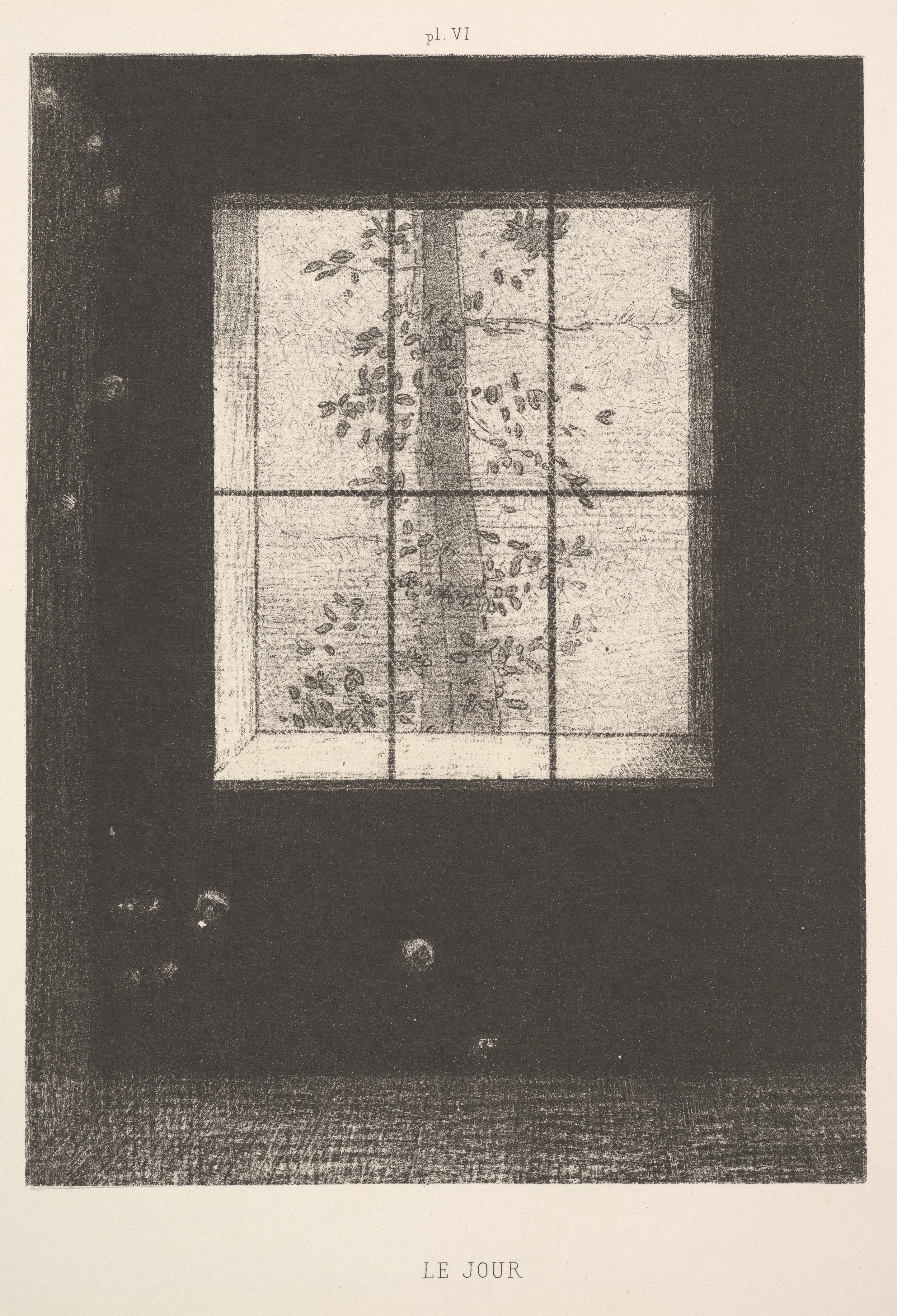
Day (Le Jour), from the series, Dreams (Songes), plate VI, Odilon Redon, 1891