
Music Therapy Resources
Explore free and open-access music therapy research, article summaries, and educational resources curated by Revival Jam. Search the library below for topics spanning autism, depression, anxiety, quality of life, dementia, and more.
Music Therapy for Late-Life Depression: Emotion, Connection, and Well-Being in Older Adults
A 2025 scoping review explores how music therapy may support older adults living with late-life depression through emotion regulation, social connection, reminiscence, motivation, and well-being. The article highlights key therapeutic processes that may shape outcomes in later-life mental health care.
Article Overview
This 2025 scoping review examines how music therapy may support older adults living with late-life depression. Reviewing 31 studies, the authors identified a range of therapeutic factors, mechanisms of change, and related outcomes associated with music therapy in this population. The review organized these findings into five domains: emotion, social, cognition, arousal, and behavior and motivation.
Among these domains, emotion emerged as the most prominent. The review highlights processes such as emotion regulation, emotional expression, pleasure, stress reduction, reminiscence, social connection, and motivation as important parts of how music therapy may help older adults with depression. Rather than focusing on one single intervention, the article maps the broader field and shows how music therapy may support mental health and quality of life in later adulthood.
Why This Matters
This article is valuable because it helps explain not only that music therapy may support older adults with depression, but also how it may work. For families, clinicians, and care communities, this kind of review offers a more complete picture of music therapy as a relational, emotional, and biopsychosocial intervention rather than just a pleasant activity.
It is also a strong fit for a public-facing music therapy library because late-life depression is an important mental health issue, and many people are looking for supportive, nonpharmacological approaches that address mood, connection, engagement, and quality of life. The review also honestly notes that the literature remains heterogeneous, which helps present the field in a credible and balanced way.
Lu, H., Li, Y., Wong, M. T. H., Qiu, X., Zhang, M., Jiang, C., Zhang, X., Lau, K. K.-L., Ho, R. T. H., & Tong, T. (2025). Therapeutic factors, presumed mechanisms of change, and relevant outcomes in music therapy for people with late-life depression: A scoping review. The Arts in Psychotherapy, 95, 102325. https://doi.org/10.1016/j.aip.2025.102325
Read The Full Article
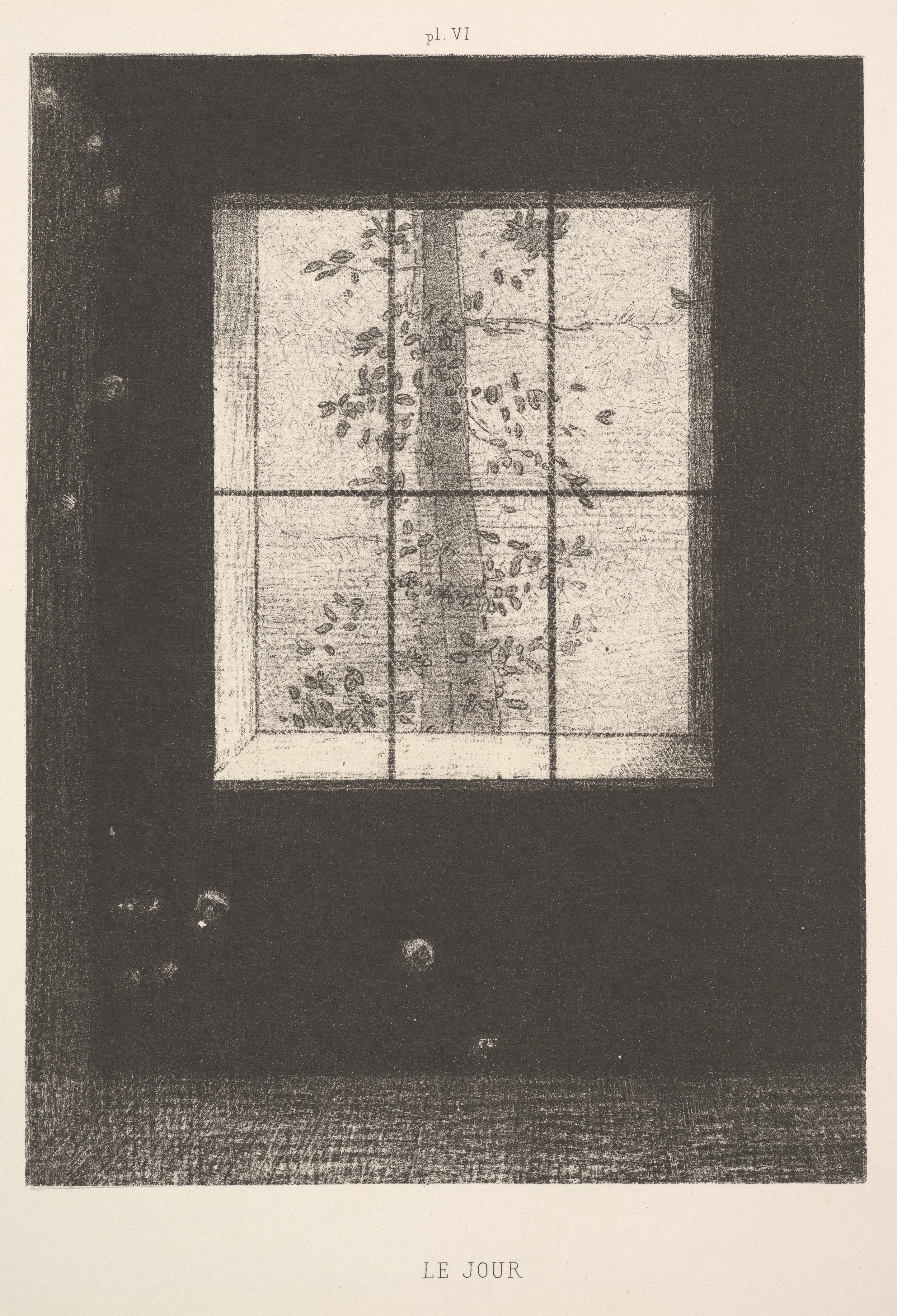
Day (Le Jour), from the series, Dreams (Songes), plate VI, Odilon Redon, 1891
Music Therapy for Psychological Trauma: Emotion Regulation, Social Connection, and Recovery
A 2025 integrative review examines how music therapy may support trauma recovery through emotion regulation, social connection, nonverbal expression, and therapeutic safety. The article highlights growing evidence for music therapy in trauma-focused care, including PTSD-related treatment research.
Article Overview
This 2025 theoretical integrative review explores how music therapy may support people recovering from psychological trauma, including post-traumatic stress disorder (PTSD). The authors describe music therapy as a clinical, evidence-based practice that has been used across mental health settings to support emotion processing, affect regulation, and functioning, while also reviewing the growing trauma-focused literature in the field.
The review identified 19 empirical studies published since 2017 and found important advances in trauma-focused music therapy research, including increased use of randomized controlled trials, physiological measures, more detailed intervention descriptions, and the emergence of manualized treatments. The paper highlights recurring themes such as emotion regulation, social affiliation, nonverbal expression, agency, and therapeutic safety as possible mechanisms through which music therapy may help trauma survivors.
Why This Matters
This article matters because it helps explain not only that music therapy may support trauma recovery, but also how it may work. The review discusses music therapy as a potentially useful trauma-informed approach because it can support emotional regulation, embodied processing, nonverbal expression, and social connection, all of which are especially relevant for people living with trauma-related distress.
For a public-facing music therapy library, this is a valuable article because it shows that the field is growing in both theory and evidence. It also positions music therapy as a promising complement to mainstream mental health care, while honestly acknowledging that the field still needs more comparative studies, streamlined interventions, and stronger replication.
Williams, J., & Sidis, A. E. (2025). Music therapy for psychological trauma: A theoretical integrative review. The Arts in Psychotherapy, 96, 102369. https://doi.org/10.1016/j.aip.2025.102369
Read The Full Article

Landscape, Albert Pinkham Ryder, 1897–98 (?)
Music Therapy Choir for Dementia: Anxiety, Depression, and Connection in Community Care
Can a therapeutic choir support people living with dementia and their caregivers? This randomized controlled trial explores how community-based music therapy may help reduce anxiety and depression while fostering connection, participation, and shared musical experiences.
Article Overview
This randomized controlled trial examined whether participation in a therapeutic choir could support people living with dementia and their primary caregivers in community settings. The Remini-Sing intervention was designed to explore outcomes related to relationship quality, quality of life, depression, social connectedness, caregiver burden, and anxiety in dementia-caregiver dyads.
Choir sessions included vocal warm-ups, familiar songs chosen by participants, simple part singing, and social time over refreshments. Although the study was underpowered because recruitment and retention fell short of the original target, the choir group showed encouraging reductions in depression and anxiety for people with dementia, with medium to large effect sizes that suggest therapeutic choir participation may be promising for future research.
Why This Matters
Dementia affects not only memory and cognition, but also mood, social connection, and the wellbeing of family caregivers. This article matters because it studies a community-based music therapy approach that is accessible, relational, and enjoyable for both people with dementia and those who care for them. It also highlights how shared music experiences may support meaningful interaction and emotional wellbeing outside of institutional care settings.
Just as importantly, the article is transparent about its limitations. The trial did not find statistically significant effects, largely because the final sample was much smaller than planned, but it still offers a useful and honest picture of what therapeutic choir participation may be able to support. For readers, families, and clinicians, it shows that music therapy research in dementia care is moving toward real-world, community-based interventions that prioritize connection as well as clinical outcomes.
Tamplin, J., Thompson, Z., Clark, I. N., Teggelove, K., & Baker, F. A. (2024). Remini-Sing RCT: Therapeutic choir participation for community-dwelling people with dementia and their primary caregivers. Journal of Music Therapy, 61(3), 263–287. https://doi.org/10.1093/jmt/thae008