

Music Therapy Resources
Explore free and open-access music therapy research, article summaries, and educational resources curated by Revival Jam. Search the library below for topics spanning autism, depression, anxiety, quality of life, dementia, and more.
Music Therapy for Depression: Expression, Support, and Emotional Well-Being
This Cochrane systematic review examined whether music therapy may help reduce depressive symptoms and support emotional well-being. Across 9 studies involving 421 participants, the findings suggest that music therapy added to standard care may provide short-term benefits for depression, anxiety, and functioning.
Article Overview
Music therapy is increasingly being explored as a supportive treatment for people living with depression. In this 2017 Cochrane systematic review, researchers examined randomized and controlled clinical trials to evaluate whether music therapy could improve depressive symptoms when added to treatment as usual or compared with other therapies. The review included 9 studies with 421 participants.
The findings suggest that music therapy added to treatment as usual may provide short-term benefits for people with depression. Compared with treatment as usual alone, music therapy was associated with improvements in clinician-rated and patient-reported depressive symptoms, and it was also linked with better anxiety and functioning outcomes. The review did not find clear evidence for improvement in quality of life, and comparisons with psychological therapies remained uncertain because the evidence was limited and, in some cases, low quality.
Why This Matters
Depression can affect emotional well-being, motivation, daily functioning, and quality of life. This article matters because it highlights music therapy as a potential supportive mental health intervention that may help reduce depressive symptoms when used alongside standard care. For readers searching for research on music therapy, depression, and emotional well-being, this review offers a strong evidence-based starting point.
It is also important because the review comes from Cochrane, a widely respected source for systematic reviews in healthcare. At the same time, the article is careful not to overstate the findings: the benefits were short-term, the total number of studies was relatively small, and some comparisons with other therapies were still uncertain. That balance makes it a credible and useful article for a website library focused on music therapy research.
Aalbers, S., Fusar-Poli, L., Freeman, R. E., Spreen, M., Ket, J. C. F., Vink, A. C., Maratos, A., Crawford, M., Chen, X.-J., & Gold, C. (2017). Music therapy for depression. Cochrane Database of Systematic Reviews, 2017(11), CD004517. https://doi.org/10.1002/14651858.CD004517.pub3
Read The Full Article

Repose, John White Alexander, 1895.
Music Therapy and Parent-Child Attachment: Bonding, Co-Regulation, and Early Relationship Support
Can music help strengthen early parent-child relationships? This systematic review explores how singing and other music interventions may support bonding, co-regulation, parental sensitivity, and relationship quality in infancy and early childhood.
Article Overview
This systematic review examines how music interventions may support parent-child attachment-related outcomes in early childhood, especially in infants and young children from birth to age five. The review looked at 23 publications representing 15 unique interventions and found that music-based approaches were associated with improvements in bonding, emotional co-regulation, parental sensitivity, and relationship quality. Singing was present in all interventions, suggesting it may be especially helpful in supporting early parent-child connection.
Rather than proving that music interventions directly increase attachment security, the review focuses on attachment-related outcomes and the psychological processes that may support healthy relationships, such as parental sensitivity, reflective functioning, and emotional co-regulation. The authors also note that music interventions were often enjoyable and acceptable to families, which may increase engagement and help parents continue using music techniques at home.
Why This Matters
Early parent-child relationships shape emotional development, regulation, trust, and wellbeing across the lifespan. This article matters because it suggests that music interventions may offer meaningful support for bonding, soothing, responsiveness, and relational attunement during infancy and early childhood. For families, clinicians, and early intervention providers, it highlights music as a practical and relationship-based way to support connection.
The review is also helpful because it is transparent about the limits of the evidence. The authors state that no included studies directly measured attachment security itself, and they describe the overall evidence base as relatively weak, with many case studies and few strong controlled trials. That makes this article valuable not because it gives a final answer, but because it offers a careful, research-informed picture of where the field currently stands.
Newman, L. J., Stewart, S. E., Freeman, N. C., & Thompson, G. (2022). A systematic review of music interventions to support parent-child attachment. Journal of Music Therapy, 59(4), 430–459. https://doi.org/10.1093/jmt/thac012
Read The Full Article

Landscape with Waterfall and a Mother and Child, Johann Peter Beer, 1800
Music Therapy for Autism Spectrum Disorder: Social Interaction, Communication, and Connection
Music therapy for autism may support social interaction, verbal and nonverbal communication, initiating behavior, and social-emotional reciprocity in children with autism spectrum disorder. This research overview from Revival Jam highlights what a major Cochrane review found and why it matters for families, educators, and clinicians.
Article Overview
Music therapy uses musical experiences and the relationships that develop through them to support communication, expression, and connection. In this Cochrane systematic review, researchers examined the effects of music therapy for children with autism spectrum disorder, with a focus on social interaction, verbal and non-verbal communication, initiating behavior, and emotional reciprocity.
The review suggests that music therapy may help improve social interaction, verbal communication, initiating behavior, and social-emotional reciprocity. The authors also describe possible benefits in areas such as social adaptation, joy, and the quality of parent-child relationships, while noting that more research is still needed.
Why This Matters
Autism support often involves more than reducing challenges. It also includes creating opportunities for connection, expression, relationship-building, and meaningful engagement. This review is important because it highlights music therapy as a relational and interactive approach that may support communication and social development in ways that feel motivating and accessible.
For families, educators, and clinicians, this review offers a helpful overview of how music therapy may support children with autism in areas that matter deeply in daily life. It also reinforces the idea that music therapy is not simply passive listening, but a trained, relationship-based process that can support growth in communication and social connection.
Geretsegger, M., Elefant, C., Mössler, K. A., & Gold, C. (2014). Music therapy for people with autism spectrum disorder. Cochrane Database of Systematic Reviews, 2014(6), CD004381. https://doi.org/10.1002/14651858.CD004381.pub3
Read The Full Article
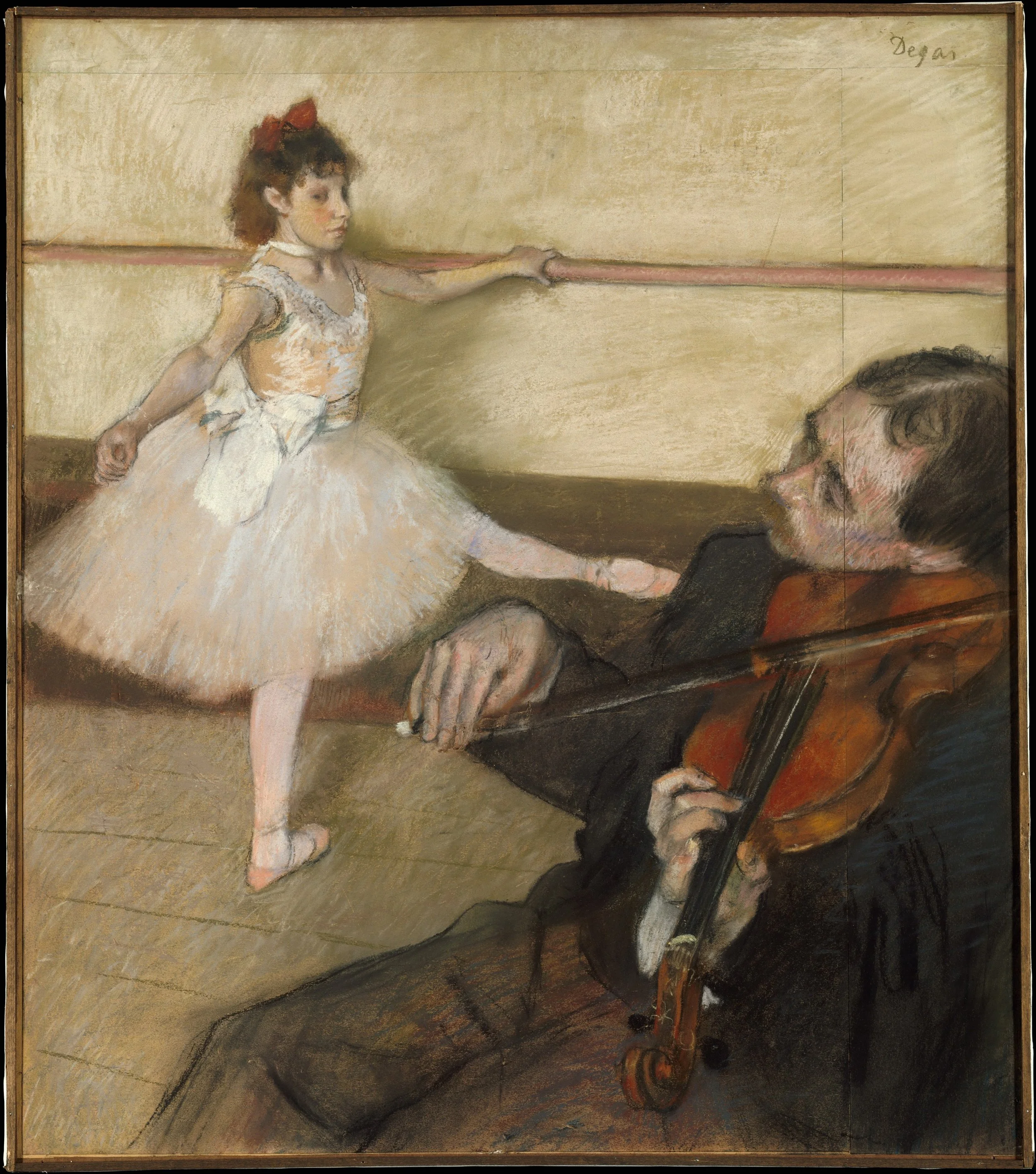
The Dance Lesson, Edgar Degas, ca. 1879.