
Music Therapy Resources
Explore free and open-access music therapy research, article summaries, and educational resources curated by Revival Jam. Search the library below for topics spanning autism, depression, anxiety, quality of life, dementia, and more.
Music Therapy for Depression: Expression, Support, and Emotional Well-Being
This Cochrane systematic review examined whether music therapy may help reduce depressive symptoms and support emotional well-being. Across 9 studies involving 421 participants, the findings suggest that music therapy added to standard care may provide short-term benefits for depression, anxiety, and functioning.
Article Overview
Music therapy is increasingly being explored as a supportive treatment for people living with depression. In this 2017 Cochrane systematic review, researchers examined randomized and controlled clinical trials to evaluate whether music therapy could improve depressive symptoms when added to treatment as usual or compared with other therapies. The review included 9 studies with 421 participants.
The findings suggest that music therapy added to treatment as usual may provide short-term benefits for people with depression. Compared with treatment as usual alone, music therapy was associated with improvements in clinician-rated and patient-reported depressive symptoms, and it was also linked with better anxiety and functioning outcomes. The review did not find clear evidence for improvement in quality of life, and comparisons with psychological therapies remained uncertain because the evidence was limited and, in some cases, low quality.
Why This Matters
Depression can affect emotional well-being, motivation, daily functioning, and quality of life. This article matters because it highlights music therapy as a potential supportive mental health intervention that may help reduce depressive symptoms when used alongside standard care. For readers searching for research on music therapy, depression, and emotional well-being, this review offers a strong evidence-based starting point.
It is also important because the review comes from Cochrane, a widely respected source for systematic reviews in healthcare. At the same time, the article is careful not to overstate the findings: the benefits were short-term, the total number of studies was relatively small, and some comparisons with other therapies were still uncertain. That balance makes it a credible and useful article for a website library focused on music therapy research.
Aalbers, S., Fusar-Poli, L., Freeman, R. E., Spreen, M., Ket, J. C. F., Vink, A. C., Maratos, A., Crawford, M., Chen, X.-J., & Gold, C. (2017). Music therapy for depression. Cochrane Database of Systematic Reviews, 2017(11), CD004517. https://doi.org/10.1002/14651858.CD004517.pub3
Read The Full Article
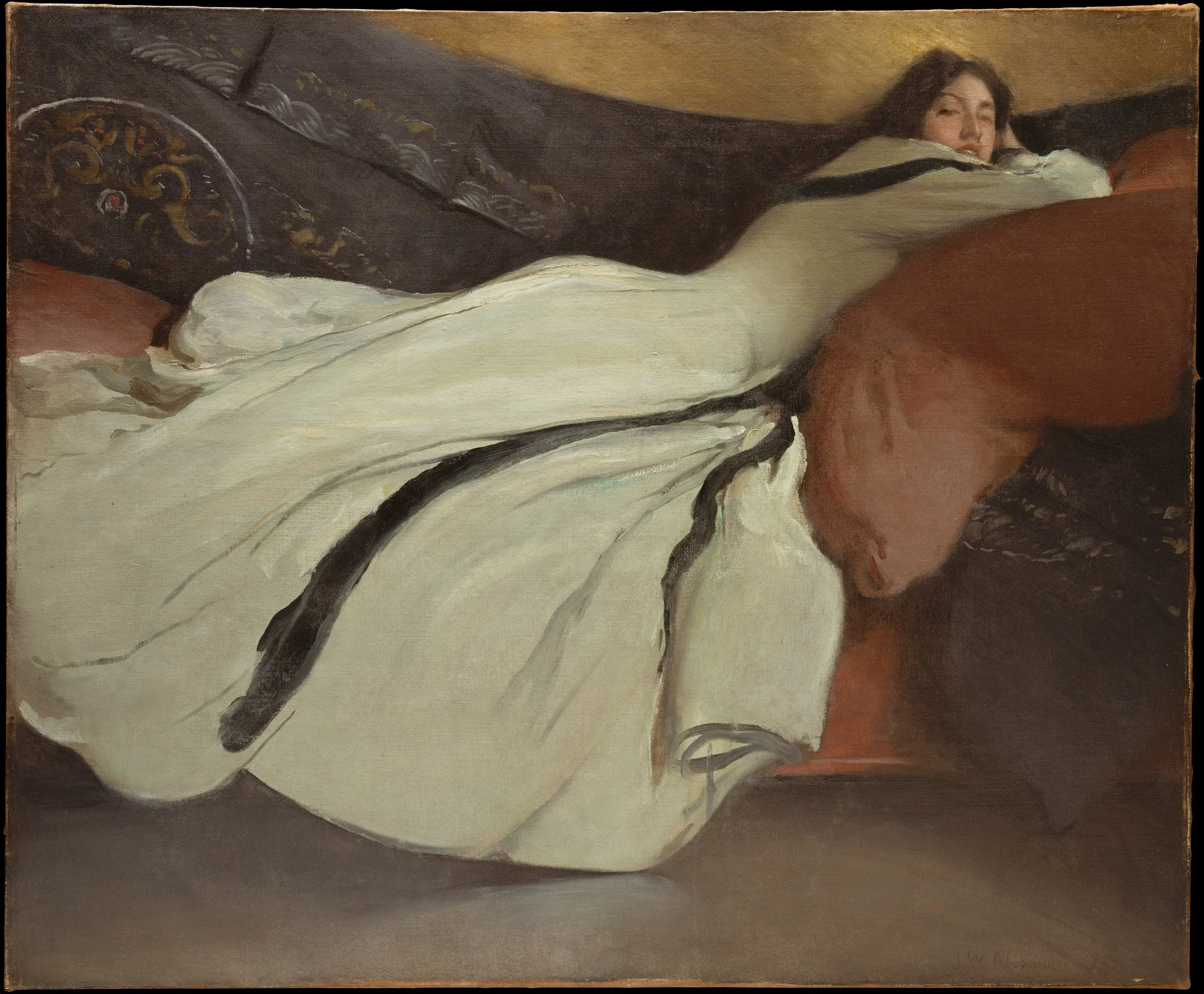
Repose, John White Alexander, 1895.
Music Therapy Choir for Dementia: Anxiety, Depression, and Connection in Community Care
Can a therapeutic choir support people living with dementia and their caregivers? This randomized controlled trial explores how community-based music therapy may help reduce anxiety and depression while fostering connection, participation, and shared musical experiences.
Article Overview
This randomized controlled trial examined whether participation in a therapeutic choir could support people living with dementia and their primary caregivers in community settings. The Remini-Sing intervention was designed to explore outcomes related to relationship quality, quality of life, depression, social connectedness, caregiver burden, and anxiety in dementia-caregiver dyads.
Choir sessions included vocal warm-ups, familiar songs chosen by participants, simple part singing, and social time over refreshments. Although the study was underpowered because recruitment and retention fell short of the original target, the choir group showed encouraging reductions in depression and anxiety for people with dementia, with medium to large effect sizes that suggest therapeutic choir participation may be promising for future research.
Why This Matters
Dementia affects not only memory and cognition, but also mood, social connection, and the wellbeing of family caregivers. This article matters because it studies a community-based music therapy approach that is accessible, relational, and enjoyable for both people with dementia and those who care for them. It also highlights how shared music experiences may support meaningful interaction and emotional wellbeing outside of institutional care settings.
Just as importantly, the article is transparent about its limitations. The trial did not find statistically significant effects, largely because the final sample was much smaller than planned, but it still offers a useful and honest picture of what therapeutic choir participation may be able to support. For readers, families, and clinicians, it shows that music therapy research in dementia care is moving toward real-world, community-based interventions that prioritize connection as well as clinical outcomes.
Tamplin, J., Thompson, Z., Clark, I. N., Teggelove, K., & Baker, F. A. (2024). Remini-Sing RCT: Therapeutic choir participation for community-dwelling people with dementia and their primary caregivers. Journal of Music Therapy, 61(3), 263–287. https://doi.org/10.1093/jmt/thae008
Read The Full Article

Music Therapy for Surgery Recovery: Pain Relief, Anxiety Support, and Recovery
A 2025 randomized controlled trial found that live and therapist-designed recorded music therapy both helped reduce pain and anxiety in adults undergoing shoulder replacement surgery. The study highlights music therapy as a practical, evidence-based support in perioperative care.
Article Overview
This 2025 randomized controlled trial examined whether music therapy could help reduce pain and anxiety in adults undergoing total shoulder arthroplasty, also known as shoulder replacement surgery. Patients were assigned to live music therapy, therapist-designed recorded music therapy, or standard care without music therapy. The study defined music therapy as music-based interventions provided by a board-certified music therapist.
Researchers found that both live and recorded music therapy were associated with significantly greater reductions in pain and anxiety than standard care alone. There were no significant differences between the live and recorded music therapy groups overall, suggesting that therapist-designed recorded interventions may also be a practical option in medical settings. The study did not find significant differences in opioid use across groups.
Why This Matters
This article is a strong fit for a public-facing music therapy library because it shows music therapy being used in a real medical setting for concrete clinical goals: reducing perioperative pain and anxiety. It also helps clarify that music therapy is not simply background music, but a structured, evidence-based intervention designed by trained music therapists.
It is also useful because the findings are practical and credible. If therapist-designed recorded music therapy can support outcomes similarly to live delivery in this context, hospitals and surgical teams may have more flexible ways to integrate music therapy into patient care. At the same time, the study stays appropriately cautious by noting limits such as its nonblinded design and single-site sample.
Armstrong, A. D., Starr, D. J., Sweet, M. D., Barillas, B., Chamberlin, A., Fioravanti, T., Napoli, C., Pahomov, E., George, S. Z., Schwab, S. M., & Weed, J. T. (2026). Live versus recorded music therapy intervention in shoulder arthroplasty. JSES International, 10, 101438. https://doi.org/10.1016/j.jseint.2025.101438
Read The Full Article

A Bouquet of Flowers, Clara Peeters, ca. 1612
Music Therapy Songwriting for Veterans: Expression, Recovery, and Emotional Support
This qualitative music therapy study examined songs written by active-duty service members during rehabilitation for PTSD, TBI, and related mental health challenges. The findings suggest that songwriting may support emotional expression, communication, identity exploration, and recovery in military settings.
Article Overview
Songwriting in music therapy is increasingly being explored as a meaningful way to support emotional expression, identity work, and communication in military rehabilitation. In this 2019 retrospective qualitative analysis, researchers examined 14 songs written by 11 active-duty service members during music therapy treatment at the National Intrepid Center of Excellence at Walter Reed. Songs were created across 2–3 individual sessions facilitated by a board-certified music therapist and reflected the experiences of service members coping with PTSD, depression, anxiety, TBI, and difficult recovery and reintegration processes.
The analysis found that songwriting gave service members a way to express fears, hopes, emotional pain, and the challenges of homecoming and rehabilitation. The authors describe songwriting as a reflective medium through which participants could communicate thoughts and feelings, explore difficult internal experiences, and share parts of their story with family, peers, and providers. Rather than testing symptom reduction in a controlled trial, the study offers qualitative insight into how music therapy songwriting may support emotional expression, reflection, and psychotherapeutic processing in military populations.
Why This Matters
This article matters because it highlights a side of music therapy research that is deeply human and clinically meaningful, even when it is not measured through symptom scores alone. For service members recovering from trauma, TBI, depression, anxiety, and difficult re-entry experiences, songwriting may offer a way to express emotions, communicate struggles, and explore identity in a form that can feel less threatening than direct conversation. The paper also suggests that songwriting may help lower resistance to emotional exploration through musical structure and metaphor, while supporting communication and self-understanding.
It is also valuable because the study shows how songs can become a bridge between inner experience and interpersonal connection. The authors note that the songs enabled service members to share thoughts, emotions, fears, and hopes with family, friends, and providers, sometimes for the first time, and describe songwriting as an important stepping stone in psychotherapeutic processing. For a site library, this makes the article especially useful for themes like music therapy for veterans, PTSD support, songwriting in therapy, identity and recovery, and emotional expression through music.
Bradt, J., Norris, M., Shim, M., Gracely, E. J., & Gerrity, P. (2019). Vocal warriors: A retrospective qualitative analysis of songwriting in music therapy during military service members’ rehabilitation. The Arts in Psychotherapy, 62, 19–27.
Read The Full Article
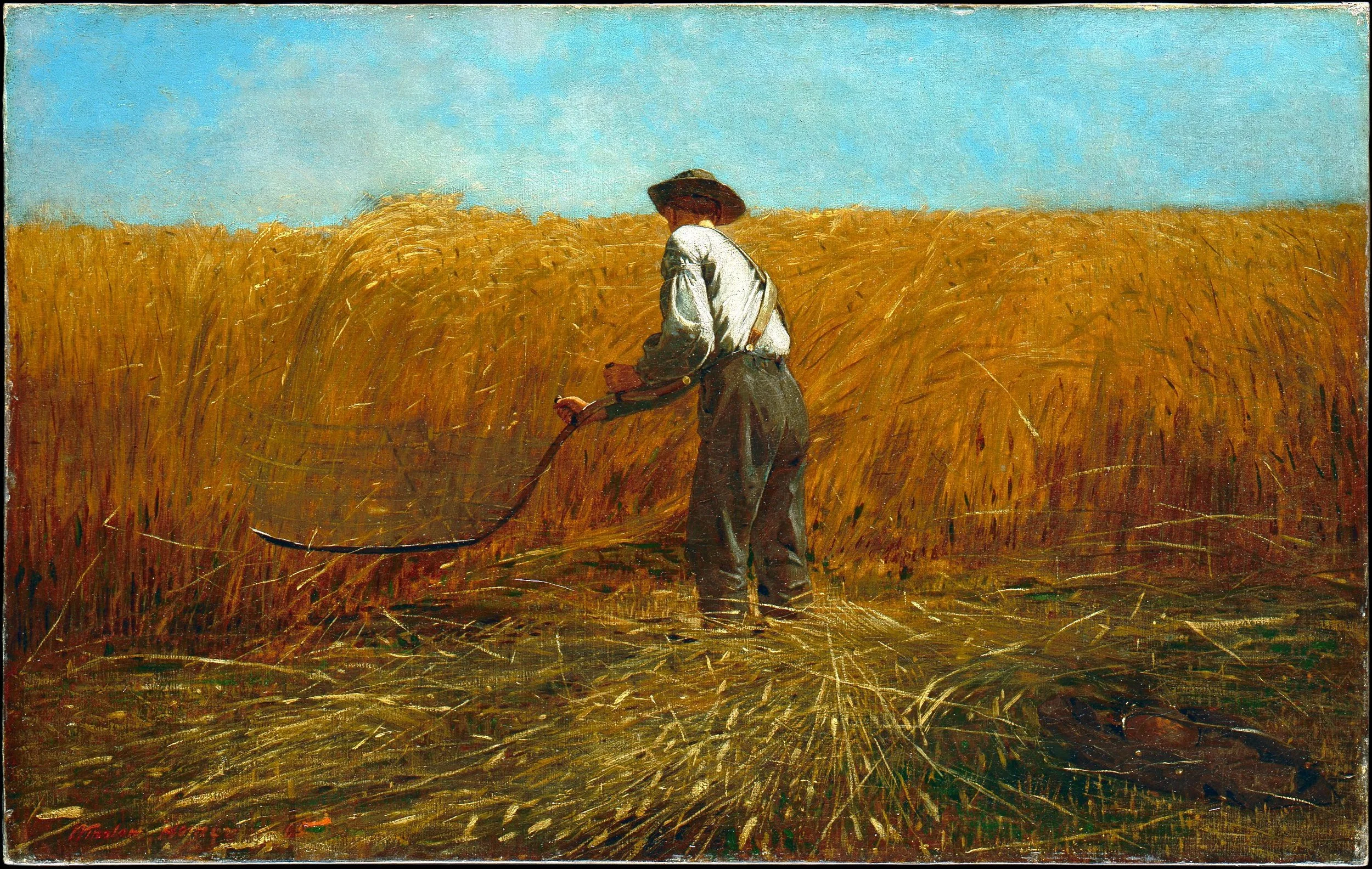
The Veteran in a New Field, Winslow Homer, 1865